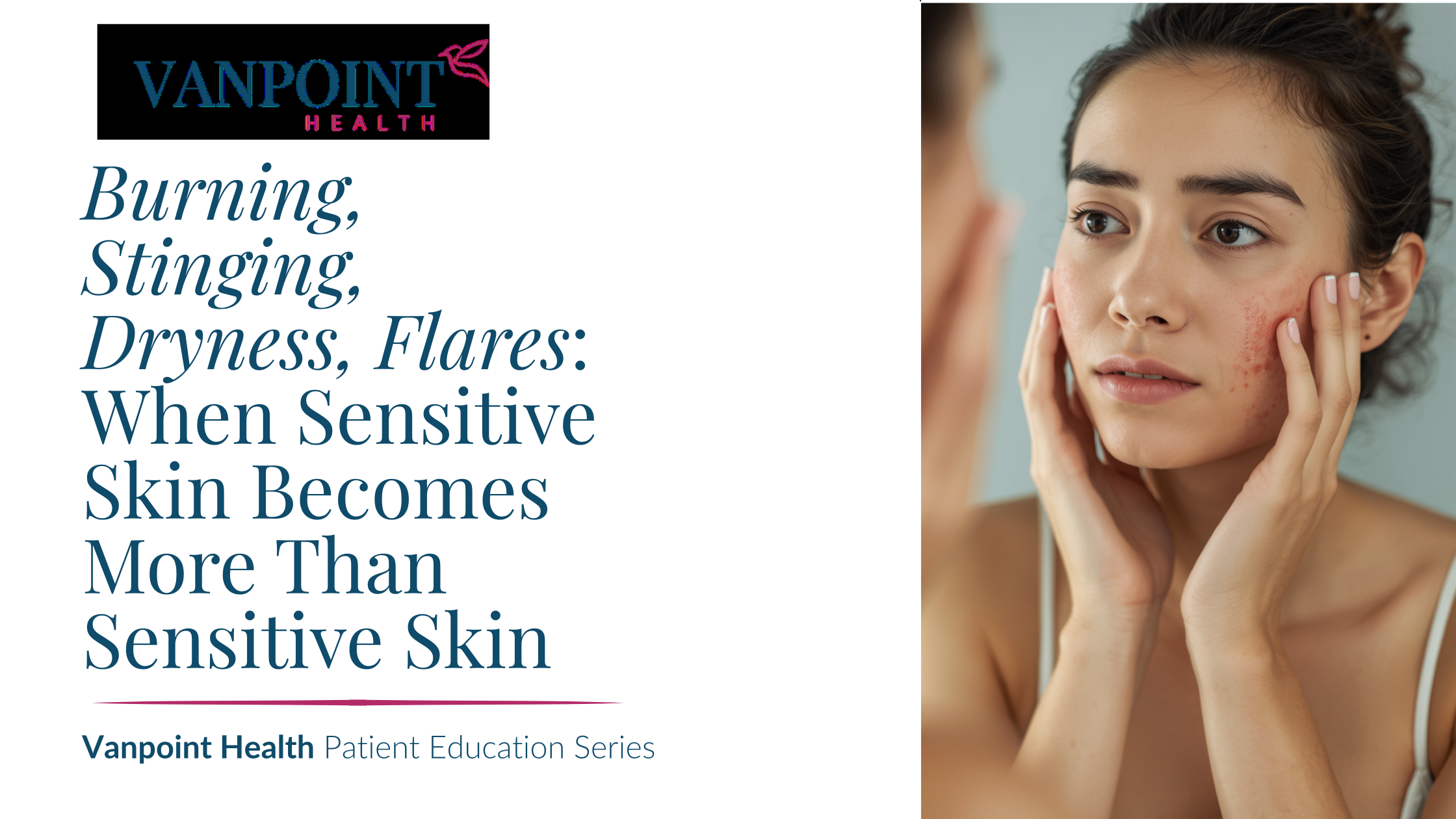
Burning, Stinging, Dryness, Flares: When Sensitive Skin Becomes More Than Sensitive Skin
Maybe you've always described your skin as sensitive.
Certain products burn.
Fragrances bother you.
Your skin becomes dry easily.
Sometimes it turns red for seemingly no reason.
So you buy products labeled “gentle,” “hypoallergenic,” or “for sensitive skin” and try to work around it.
But when burning, stinging, itching, dryness, or recurring patches of irritated skin become a regular part of your life, it may be worth asking:
Is my skin simply sensitive—or is something else going on?
“Sensitive Skin” Can Mean Many Different Things
Sensitive skin isn't one specific diagnosis.
People may use the term to describe skin that:
Burns or stings easily
Becomes red or irritated
Feels unusually dry or tight
Itches frequently
Reacts to skincare products
Develops recurring rough or inflamed patches
There are many possible explanations for these symptoms, including eczema, contact dermatitis, rosacea, dry skin, or irritation from products and environmental exposures.
That's why persistent symptoms shouldn't automatically be dismissed as “just sensitive skin.”
Pay Attention to Symptoms That Keep Coming Back
An occasional reaction to a harsh product doesn't necessarily mean you have a chronic skin condition.
But patterns matter.
Maybe the same areas repeatedly become irritated.
Maybe your skin improves temporarily but never stays comfortable.
Maybe you've spent years switching soaps, moisturizers, detergents, and skincare products trying to find the one thing your skin will tolerate.
Or perhaps symptoms have progressed from occasional sensitivity to recurring:
Itching
Burning or stinging
Redness
Dry, cracked skin
Inflamed patches
Flares that interfere with sleep or everyday comfort
At that point, continuing to experiment with products may not answer the bigger question:
Why does my skin keep reacting this way?
Sometimes You Need a Diagnosis—Not Another Skincare Product
When skin repeatedly burns, itches, flakes, or becomes inflamed, it's easy to assume you simply haven't found the right moisturizer yet.
But skincare products can't address every underlying cause of chronic skin irritation.
A medical evaluation can help determine whether symptoms may be related to eczema or another condition and whether treatment beyond basic skincare should be considered.
This can be particularly important if:
Symptoms are becoming more frequent
The rash is spreading
Your skin cracks, bleeds, or becomes painful
Itching interferes with sleep
Over-the-counter products aren't enough
You aren't sure what's causing the problem
The goal isn't to label every skin reaction as eczema.
It's to understand what you're actually treating.
You Shouldn't Have to Build Your Life Around “Sensitive Skin”
If you're constantly worrying about which product might cause the next reaction, avoiding activities because your skin is uncomfortable, or cycling through products without lasting improvement, that burden matters.
Good care should look beyond simply calming today's irritation.
It should help answer:
What's causing these symptoms?
What should I use?
What should I avoid?
What should I do when symptoms flare?
And how can we work toward better control over time?
Sometimes the biggest relief isn't finding another “sensitive skin” product.
It's finally having a clearer strategy.
When “Sensitive” Doesn't Feel Like a Good Enough Explanation Anymore
If burning, stinging, dryness, itching, or recurring flares have become your normal, it may be worth looking beyond the sensitive-skin aisle.
At Vanpoint Health, we help patients understand persistent inflammatory skin symptoms and develop personalized treatment strategies tailored to their individual condition and needs.
Because you shouldn't have to spend years wondering:
“Why does everything irritate my skin?”
Sometimes the next step isn't another product.
It's getting a better understanding of what's happening to your skin in the first place.
