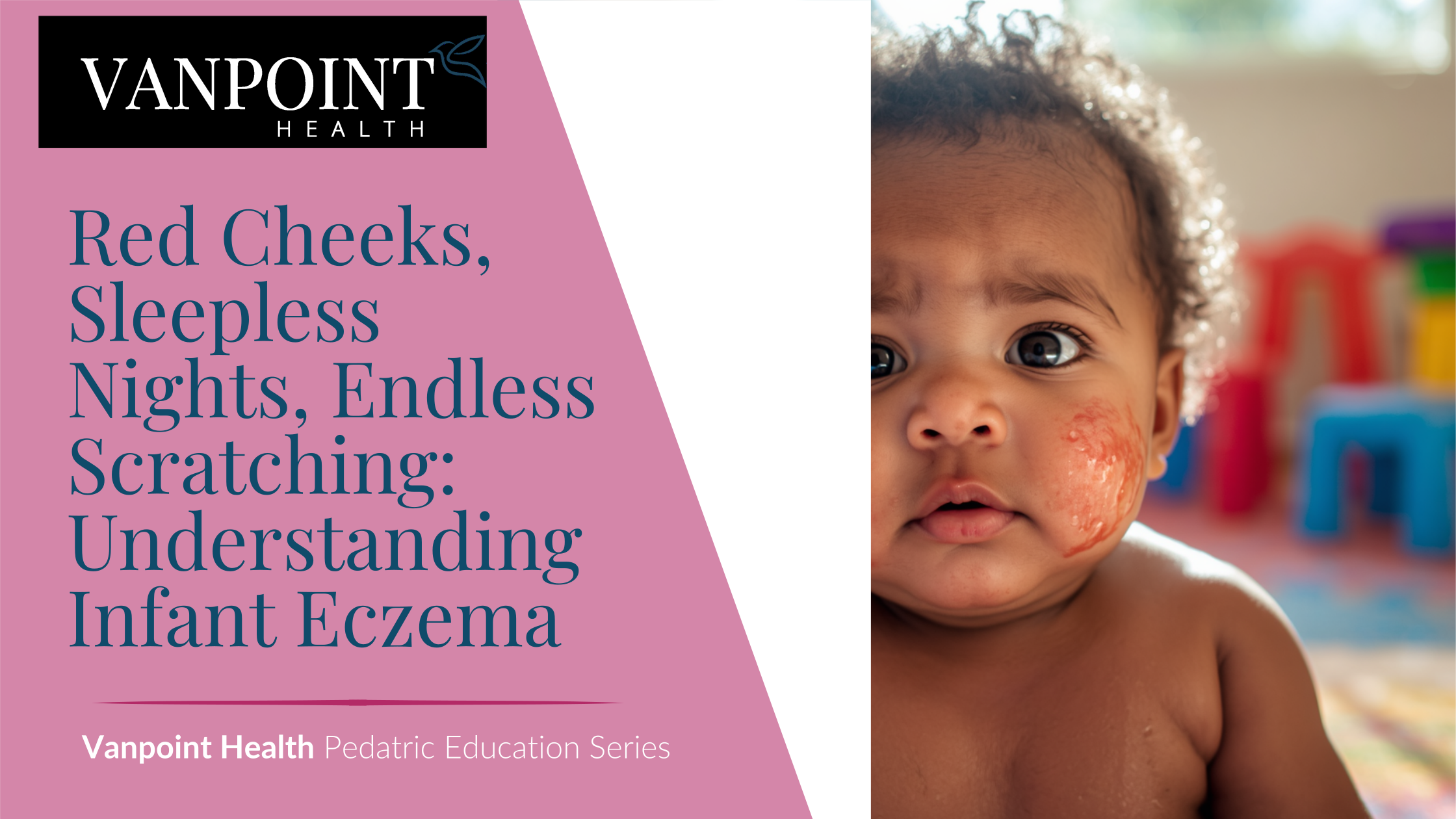
Red Cheeks, Sleepless Nights, Endless Scratching: Understanding Infant Eczema
It may start with a little redness on the cheeks.
Then the skin becomes dry and rough.
Your baby starts rubbing their face against the crib sheet or scratching whenever their hands are free.
Before long, bedtime becomes harder, everyone is sleeping less, and you find yourself wondering:
“Is this normal dry skin—or could this be eczema?”
Infant eczema is common, but that doesn't mean it is always easy to manage.
Understanding what's happening with your baby's skin can help you feel more confident about what to do next.
What Does Infant Eczema Look Like?
Eczema—also called atopic dermatitis—is a chronic inflammatory skin condition that often begins during infancy or early childhood.
In babies, eczema may appear as:
Red or discolored patches
Dry, rough, or scaly skin
Irritated cheeks or facial skin
Areas of persistent inflammation
Cracked or sensitive skin
Scratching or rubbing
Symptoms can vary considerably from one baby to another.
And while eczema often involves dry skin, it isn't simply a dryness problem.
The skin barrier and inflammation both play important roles in the condition.
Why Is My Baby Scratching So Much?
Itching is one of the hallmark symptoms of eczema.
Because babies can't tell you their skin itches, you may notice behaviors such as:
Scratching their face or body
Rubbing against clothing or bedding
Becoming restless
Having difficulty settling
Scratching during sleep
Becoming increasingly irritable
Unfortunately, scratching can further irritate already-sensitive skin.
This creates what is known as the itch-scratch cycle:
Itching → Scratching → More irritation → More itching
Your baby isn't scratching because they're developing a bad habit.
They're responding to discomfort.
That's why addressing the eczema itself is so important.
Why Are Nights Often So Difficult?
For many families, nighttime is when infant eczema feels the hardest.
A baby who seems relatively comfortable during the day may become restless once it's time to sleep.
Itching can interrupt sleep repeatedly, leaving parents waking throughout the night to:
Stop scratching
Reapply moisturizer
Comfort their baby
Adjust clothing or bedding
Try to help them settle again
After enough difficult nights, everyone becomes exhausted.
That's why sleep matters when evaluating eczema.
Successful treatment isn't only about how the skin looks. It's also about how comfortably your baby is able to sleep and function.
Isn't It Just Dry Skin?
This is one of the most common questions parents ask.
Moisturizing is an important part of caring for eczema-prone skin because it helps support the skin barrier and reduce dryness.
But eczema also involves inflammation.
If your baby's skin remains persistently red, itchy, irritated, or uncomfortable despite consistent moisturizing, moisturizer alone may not be enough.
Depending on your baby's symptoms, age, and severity, a healthcare provider may recommend additional treatment to control inflammation and help the skin recover.
The goal isn't simply finding a stronger moisturizer.
It's understanding what your baby's eczema actually needs.
What About Food Allergies?
Parents of babies with eczema commonly wonder whether something their baby is eating—or something in a breastfeeding parent's diet—is causing the problem.
Eczema and food allergy can occur together, particularly in some babies with more severe eczema.
But having eczema does not automatically mean your baby has a food allergy, and not every eczema flare is caused by food.
Before eliminating foods or making significant dietary changes, talk with your child's healthcare provider about your concerns.
If your baby develops symptoms such as hives, facial or lip swelling, repeated vomiting, coughing, wheezing, or breathing difficulty soon after eating, seek appropriate medical care. Breathing difficulty or other signs of a severe allergic reaction require emergency attention.
When Should You Ask for More Help?
Eczema doesn't need to look severe before it's worth discussing with a healthcare provider.
Consider additional guidance if your baby:
Scratches frequently
Regularly wakes because of itching
Has eczema that repeatedly returns
Remains uncomfortable despite consistent skincare
Scratches until the skin becomes damaged
Has symptoms that aren't improving with the current treatment plan
Develops oozing, crusting, or other possible signs of infection
Sometimes the next step isn't another product.
It's a more personalized plan.
The Goal Is More Than Clearer Skin
When parents first seek eczema treatment, it's natural to want the rash to disappear.
But long-term eczema management should aim for something bigger.
The goal is helping your baby:
Itch less
Sleep more comfortably
Experience fewer disruptive flares
Maintain healthier skin
Spend more time comfortable and content
And it's helping your family spend less time worrying, researching, and reacting to eczema.
A More Comfortable Path Forward
If red cheeks, scratching, and sleepless nights have become a regular part of life in your home, you don't have to simply wait and hope your baby's eczema improves.
At Vanpoint Health, we focus on personalized pediatric eczema care that helps families understand their child's symptoms, develop a clear treatment plan, and work toward better long-term control.
Because treating infant eczema isn't only about calming the skin—it's about helping your baby feel comfortable enough to sleep, play, grow, and simply be a baby.
See If Structured Pediatric Eczema Care Is Right For Your Child
