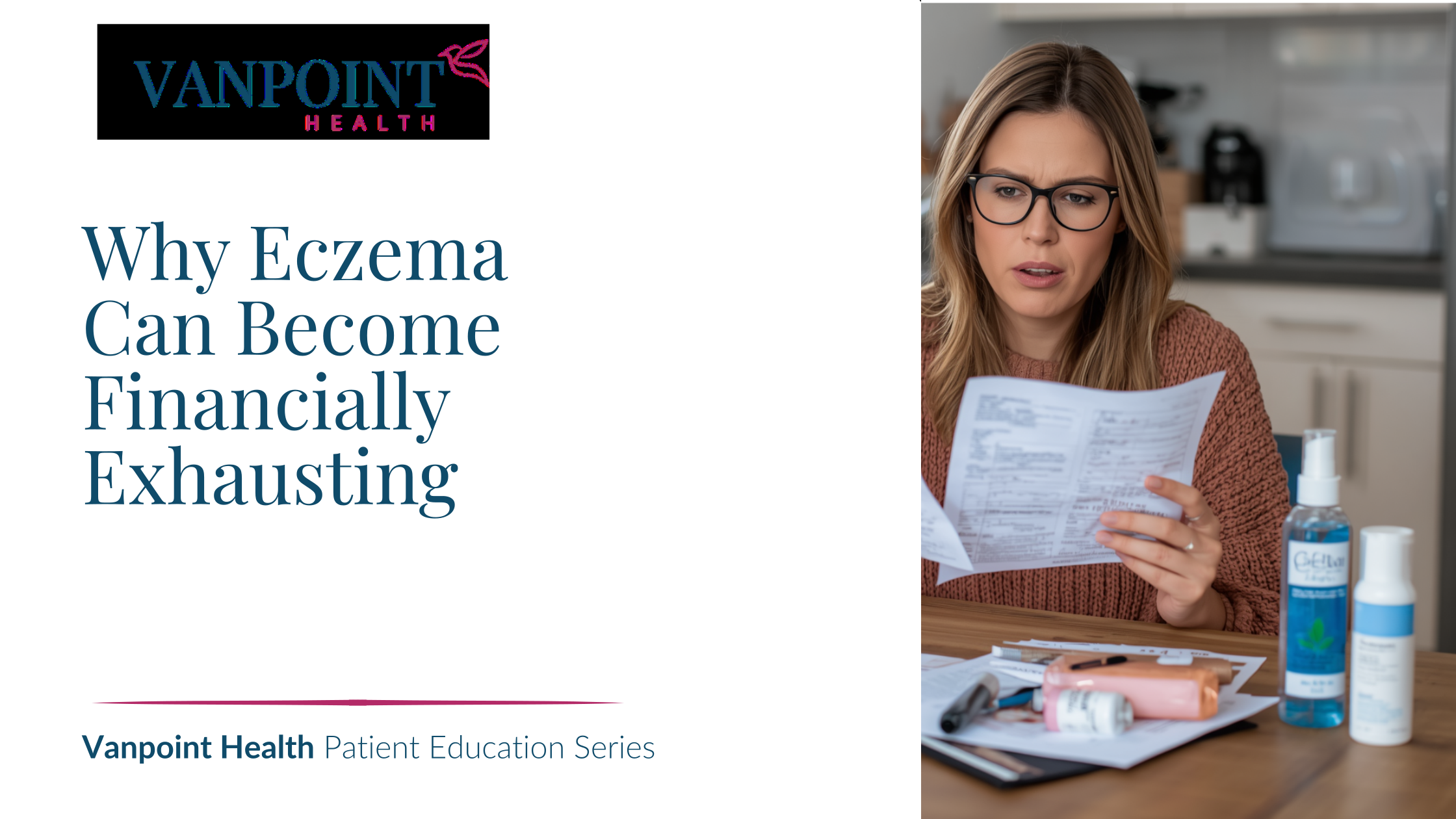
Why Eczema Can Become Financially Exhausting
Eczema can be expensive in ways people don't always talk about.
It's not necessarily one large medical bill.
Sometimes it's dozens of smaller expenses that slowly add up.
The moisturizer you buy again.
The prescription copay.
Another appointment.
The specialty skincare product that didn't help.
New clothes because certain fabrics irritate your skin.
Time away from work for appointments—or because you barely slept the night before.
After months or years, managing eczema can begin affecting more than your skin.
It can affect your wallet, too.
The Cost of Skincare Adds Up
People with chronic eczema may use moisturizers and other skincare products far more frequently than the average person.
And finding products that feel comfortable can involve trial and error.
You may have purchased:
Moisturizers
Ointments
Cleansers
Specialty shampoos
Fragrance-free products
Sensitive-skin laundry products
Over-the-counter itch products
One product may not seem particularly expensive.
But replacing these products month after month can create a meaningful ongoing expense.
Then There's the Cost of Trying Things That Don't Work
When eczema remains uncontrolled, it's natural to keep searching.
Someone recommends a cream.
You see another product online.
A friend swears by something.
You read about a new skincare routine.
So you try it.
Sometimes it helps.
Sometimes it doesn't.
And sometimes you end up with a bathroom cabinet full of half-used products.
For many patients, one of the hidden costs of eczema is simply the constant search for something that might finally provide relief.
Prescriptions and Medical Care Can Add Another Layer
Depending on the severity of eczema, patients may also have expenses related to:
Prescription medications
Copays
Deductibles
Specialist appointments
Follow-up visits
Laboratory testing when needed
Advanced medications for some patients
Insurance coverage can vary considerably.
Even when treatment is covered, navigating deductibles, copays, prior authorizations, and medication coverage can become another source of stress.
For some patients, accessing treatment becomes almost as exhausting as managing the eczema itself.
Eczema Can Affect Work
The financial impact isn't limited to what you purchase.
Chronic itching and poor sleep can make working more difficult.
You may need time away from work for appointments.
A severe flare may make certain jobs physically uncomfortable.
Nighttime itching may leave you exhausted the next morning.
Some people find it harder to concentrate or remain productive during significant flares.
That means eczema can sometimes create indirect financial costs, even when no medical bill is involved.
Small Everyday Costs Can Accumulate
There are also expenses that don't immediately look like “eczema costs.”
Replacing clothing damaged by ointments.
Buying breathable fabrics because other materials aggravate symptoms.
Changing bedding more frequently.
Using larger quantities of moisturizer.
Purchasing travel-size versions of products you know your skin tolerates.
Paying more for fragrance-free or sensitive-skin household products.
Each expense may seem minor.
Together, they can become another part of the chronic eczema burden.
Uncontrolled Eczema Can Be Particularly Expensive
When eczema remains poorly controlled, patients may move repeatedly through the healthcare system.
Another flare.
Another appointment.
Another prescription.
Another product.
Another temporary improvement.
Then another flare.
This doesn't mean spending more money automatically produces better eczema control.
And it certainly doesn't mean expensive treatment is always better.
But it does highlight an important question:
Are you spending money repeatedly managing individual problems without having a clear long-term strategy?
Financial Stress Can Affect Treatment Decisions
Cost can also influence how people manage their eczema.
You may delay an appointment.
Stretch a prescription longer than intended.
Avoid filling a medication.
Use less product than recommended.
Or continue using something that isn't working because you've already spent money on it.
These are important things to discuss with your healthcare team.
A treatment plan isn't truly practical if a patient can't realistically access or maintain it.
Cost should be part of the treatment conversation.
Better Care Doesn't Always Mean More Expensive Care
Long-term eczema management isn't about purchasing every new product or choosing the most expensive medication.
It's about creating an appropriate treatment strategy based on your individual condition.
That may mean:
Simplifying your skincare routine
Identifying which products are actually necessary
Using medications appropriately
Evaluating whether current treatment is providing adequate control
Developing a plan for recurring flares
Considering insurance coverage when selecting treatments
Reassessing the plan when something isn't working
Sometimes having fewer, clearer steps can be more valuable than continuing to add products.
Medication Access Support Can Matter
For patients who need specialty medications or biologic therapies, insurance approval can sometimes be complicated.
Prior authorization requirements, coverage criteria, denials, appeals, and specialty pharmacy coordination can create additional barriers between a patient and prescribed treatment.
Having support through that process can make a meaningful difference.
At Vanpoint Health, our care includes dedicated prior-authorization and biologics support for patients prescribed specialty medications, helping navigate insurance requirements and medication access when needed.
Because developing the right treatment plan is only part of the process.
Patients also need help accessing the treatment that has been prescribed.
The Cost of Eczema Isn't Just Financial
After years of appointments, products, prescriptions, lost sleep, and trial-and-error, eczema can take a toll on more than your budget.
It costs time.
Energy.
Attention.
And peace of mind.
At Vanpoint Health, we focus on personalized long-term eczema care designed to help patients move away from constant reaction and toward a clearer, more structured approach to managing chronic eczema.
The goal isn't to spend more treating eczema.
It's to make sure the time, effort, and resources you're already putting into your care are part of a thoughtful strategy aimed at better long-term control.
